GarageCam Lives! ExecuTorch on RPi 5

Due to competing priorities, getting the first "baby" model out the door on ExecuTorch took far longer than anticipated.
What does the model do?
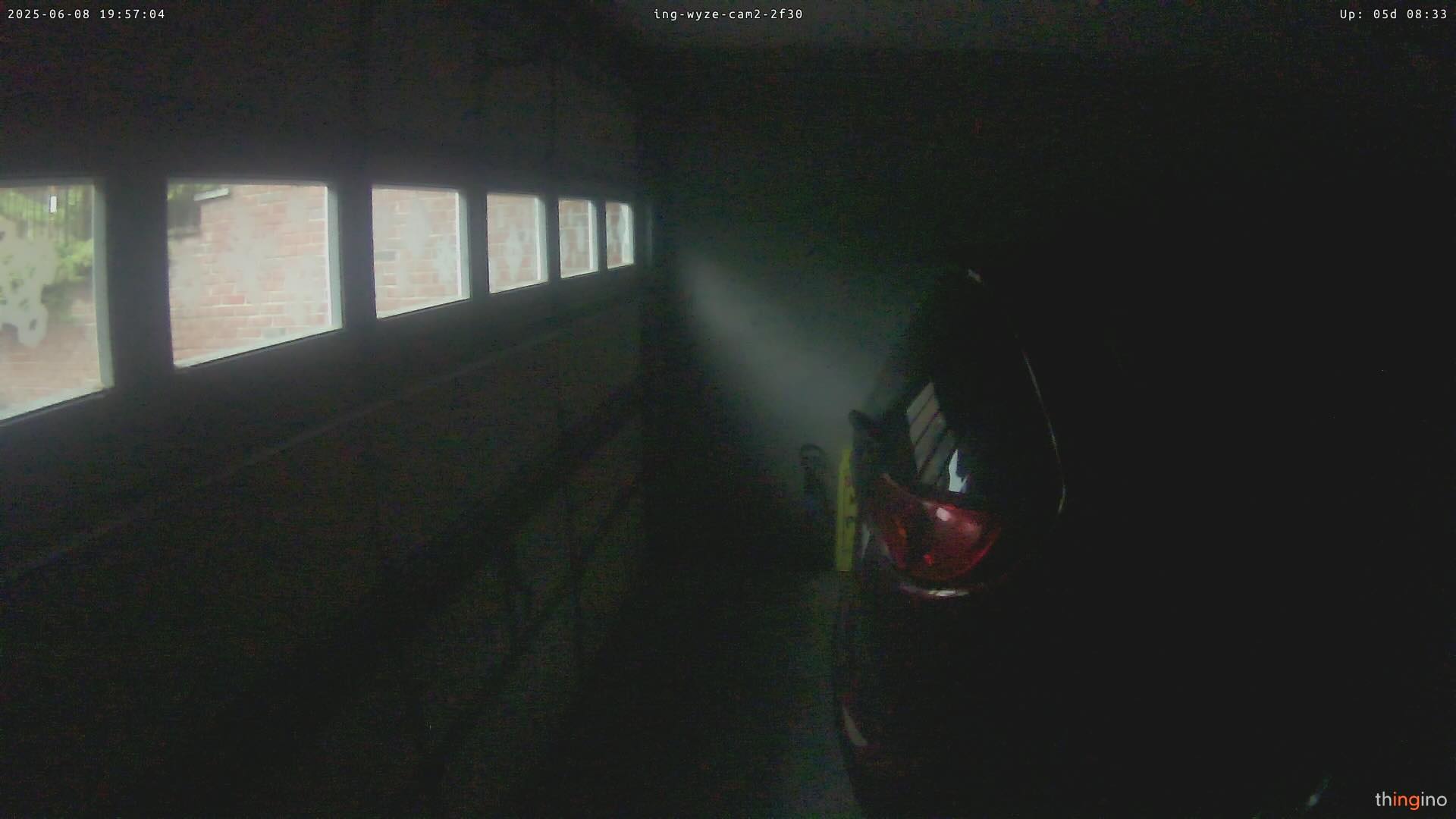
The model monitors a webcam powered by Thingino and served to HomeKit via Scrypted. It produces two primary predictions published to MQTT, which are then exported to HomeKit via Homebridge using mqtt-things:
- Door Open/Closed
- Car Home/Away
Please see the previous post on GarageCam for context on the evolution of this project.
How does it run?
- Raspberry Pi 5 - set to poll every 30s.
- Raspberry Pi 4 - Currently sidelined due to a build mismatch.
The underlying code maps PyTorch operations to specific CPU sets via ExecuTorch, but this process is currently error-prone. Aligning the right instruction sets with the target architecture requires precise configuration, which led to the RPi 4 hiccups.
2026-02-18 06:01:42,406 [INFO] model_runner.inference: Loading PTE model from /app/model/model.pte
[program.cpp:153] InternalConsistency verification requested but not available
[cpuinfo_utils.cpp:71] Reading file /sys/devices/soc0/image_version
[cpuinfo_utils.cpp:87] Failed to open midr file /sys/devices/soc0/image_version
[cpuinfo_utils.cpp:100] Reading file /sys/devices/system/cpu/cpu0/regs/identification/midr_el1
[cpuinfo_utils.cpp:100] Reading file /sys/devices/system/cpu/cpu1/regs/identification/midr_el1
[cpuinfo_utils.cpp:100] Reading file /sys/devices/system/cpu/cpu2/regs/identification/midr_el1
[cpuinfo_utils.cpp:100] Reading file /sys/devices/system/cpu/cpu3/regs/identification/midr_el1
2026-02-18 06:01:42,408 [INFO] model_runner.inference: PTE model loaded successfully
2026-02-18 06:01:42,408 [INFO] model_runner.mqtt_client: Connecting to MQTT broker mqtt_broker:1883
2026-02-18 06:01:42,412 [INFO] model_runner.mqtt_client: Connected to MQTT broker
2026-02-18 06:01:42,512 [INFO] model_runner.healthcheck: Healthcheck server listening on port 8080
2026-02-18 06:01:42,613 [INFO] model_runner.runner: All components initialized successfully
2026-02-18 06:01:42,613 [INFO] model_runner.runner: Running inference every 10.0s
2026-02-18 06:01:43,281 [INFO] model_runner.camera: ONVIF snapshot URI: http://192.168.000.000/image.jpg
2026-02-18 06:01:44,311 [INFO] model_runner.runner: Debug snapshot saved: /tmp/model_runner_debug/snapshot_20260218_060144.jpg
2026-02-18 06:01:44,326 [INFO] model_runner.state: State change: car_present: UNKNOWN -> OFF (prob=0.198)
2026-02-18 06:01:44,326 [INFO] model_runner.state: State change: door_open: UNKNOWN -> OFF (prob=0.000)
2026-02-18 06:01:44,326 [INFO] model_runner.state: State change: door_closed: UNKNOWN -> ON (prob=0.801)
How does it perform?
Surprisingly well! The Raspberry Pi 5 handles the inference load with ease, maintaining a consistent polling interval without thermal or resource issues.
How efficient is it?
- Model Size: Optimized for edge deployment using PTE formats.
- CPU Consumed: Minimal impact on the Pi 5's quad-core processor.
- Memory Consumed: Low footprint, leaving plenty of headroom for other services.
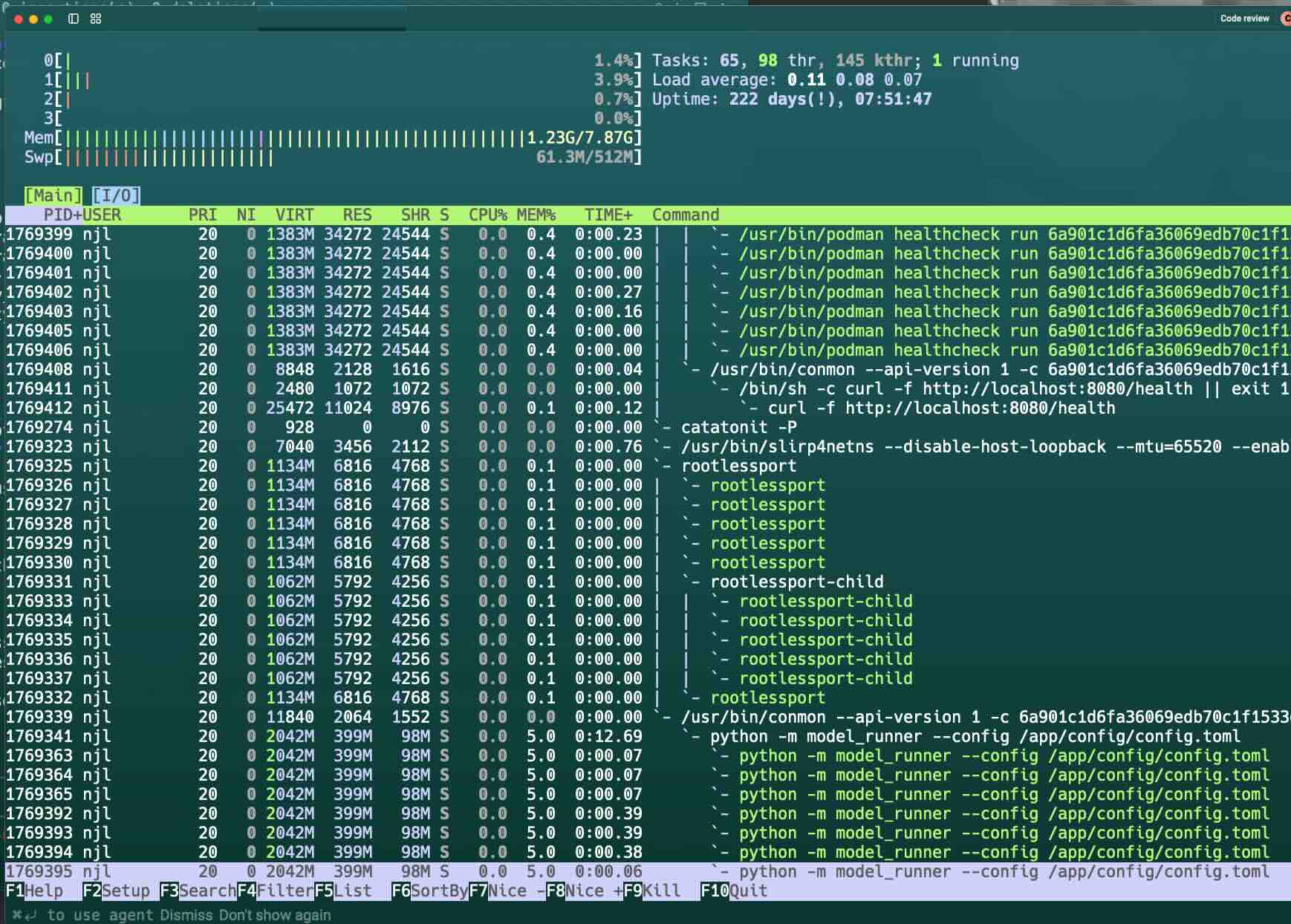
While the resource usage is excellent, I'm still refining the observability stack to better track long-term ML accuracy and model drift.
Does this help avoid Frigate / Scrypted NVR fees?
Nope, you should still pay them. Eventually, my answer may change, but not without more observability work and scaling this across more cameras.
Where is the code?
Next Time—it's not presentable to the public (yet) largely as there is still a lot of hard-coded stuff with PII that I want to remove.
ExecuTorch and the CompileVM
Rather than bloat my main workstation with cross-compilation support, I've added a QEMU/UTM Debian VM for compiling the Python wheels for ExecuTorch. This will be factored out of the main repo as a more generic solution.
- Note: I have a compile container as well, but in principle, I could have run this on an x86 box so it wasn't a generic cross-compile/arch-agnostic pipeline.
Did PyTorch Lightning help?
Tremendously versus straight PyTorch. At some point, I need to dig into what is going on under the hood.
Did AI Assist with the coding / testing / design?
Yes. It was used for boilerplate and autocomplete. Sadly, as some of the tech (ExecuTorch, ONNX, TFLite), Daytona, BaseTen, and Modal was not familiar to me, Gemini, Claude (Opus), and Grok helpfully jumped in to help—but the subtle bugs hurt, a lot.
How does this really help?
I've done nothing special here—but it opens the door to a generic home-ML pipeline of using bigger "Teacher" models to train smaller "Student" models that can run on non-specialized hardware.
Next Steps for GarageCam
- Model Perf Tracking: Need to add in Arize Phoenix or Sentry for tracking model drift and inference performance.
- Model Architecture: See the next post in the Frontier Research blog where I may reveal my ignorance.
- Model Inference Footprint: Fix the RPi 4 and explore other smaller processors.
- Data Privacy: Add in bounding, labeling, and masking of private data with the local Teacher. Once properly masked, Daytona/Modal/BaseTen/Lightning are excellent for beefy training.
- Differential Privacy: Exploring how much noise can be added to the picture without breaking the classifier.